An initiative from the “Coeur à Keur” foundation for children’s health
Eight days of training for cooks from the three childcare centers with which the foundation works. This initiative by the “Cœur à Keur” Foundation aims to improve cooks’ skills in child nutrition, food hygiene and culinary preparation, to ensure a healthy, balanced diet for children.
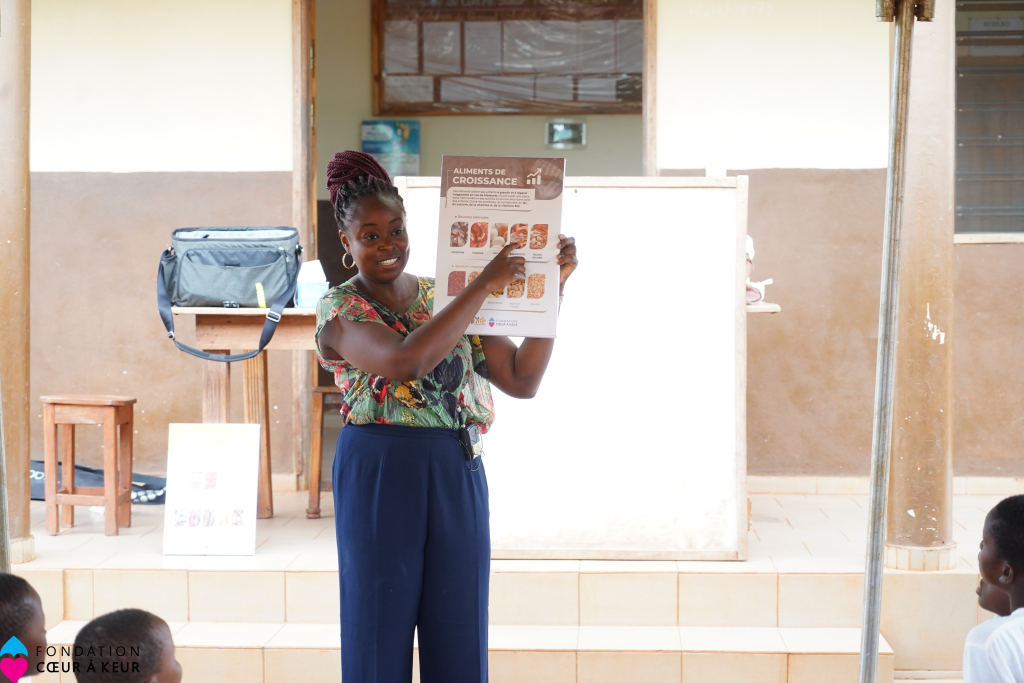
The training, which ran from July 08 to 17, 2024 in thevarious partner centers, covered various modules, including feeding children under six months, dietary diversification, kitchen hygiene, the role of food groups and assessing children’s nutritional status. Participants learned to distinguish between the different food groups – foods for strength, growth and protection – and their importance for a balanced diet. A cooking demonstration session enabled participants to practice preparing nutritious meals.
Involvement of the Welcome Centers
Three of the “Coeur à Keur” Foundation’s partner childcare centers were involved in organizing the training. These were the Saints Innocents Orphanage in Lobogo, run by Sister Damienne AGUEH, the Agnangnan Reception and Reintegration Centre in Abomey, run by Sister Alexandrine ADISSIN, and the Sainte-Thérèse de l’Enfant Jésus Centre, run by Sister Sidonie AVOCE. The cooks from each center, as well as the children, took an active part in the training.
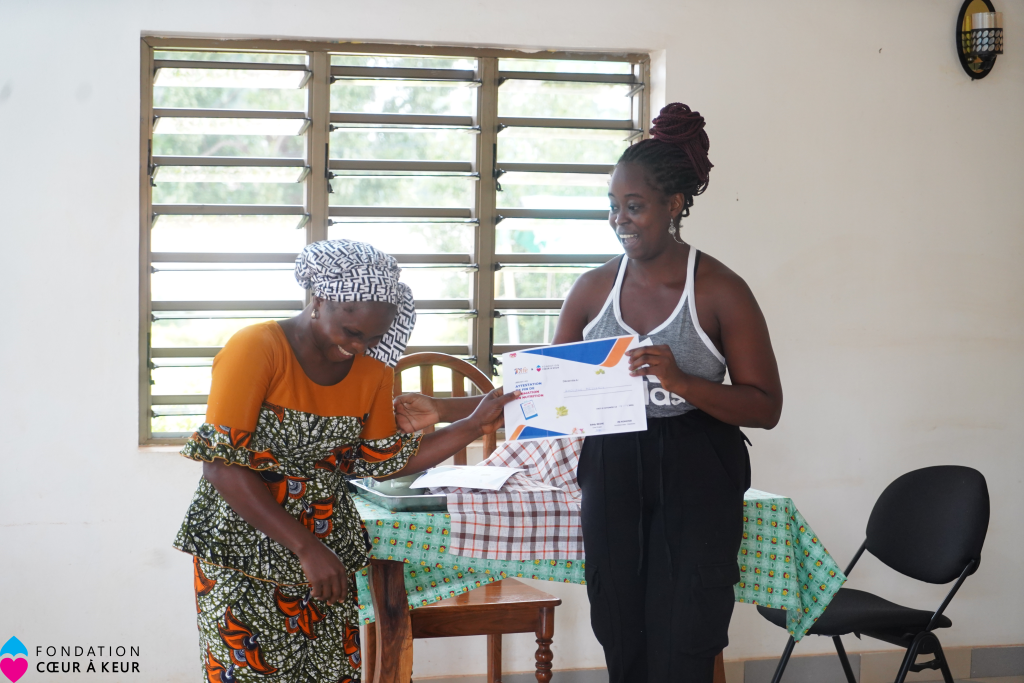
The training, led by Ifè KOHOSSI, founder of IfèNutrition, a nutritionist and dietician, was well received by the participants, with a high level of participation and commitment. The Foundation, through Project Manager Eddy BEDIE, expressed its satisfaction, noting the efficiency of the organization and the enthusiasm of the training beneficiaries. Certificates were awarded to all the cooks in recognition of their devotion and the skills they had acquired.
The main challenges encountered included the participants’ initial motivation, which was quickly overcome thanks to interactive and practical teaching methods. In the future, the foundation plans to reassess the children’s nutritional status to measure the impact of this training. Feedback sessions and adjustments to the training programs are also envisaged to continually improve the effectiveness of the interventions.